
Many people understand the importance of colonoscopy screening, yet still delay or avoid the procedure. Common concerns include discomfort during the examination, the need for sedation, potential complications and anxiety about what the test might reveal.
These concerns are understandable and can become a barrier to timely screening.
Water-assisted colonoscopy is an approach designed to improve patient comfort during the procedure while maintaining the effectiveness of colon examination. By using water instead of air during the insertion phase, the technique aims to reduce discomfort and, in some cases, lessen the need for sedation.
The Uncomfortable Truth about Standard Colonoscopy
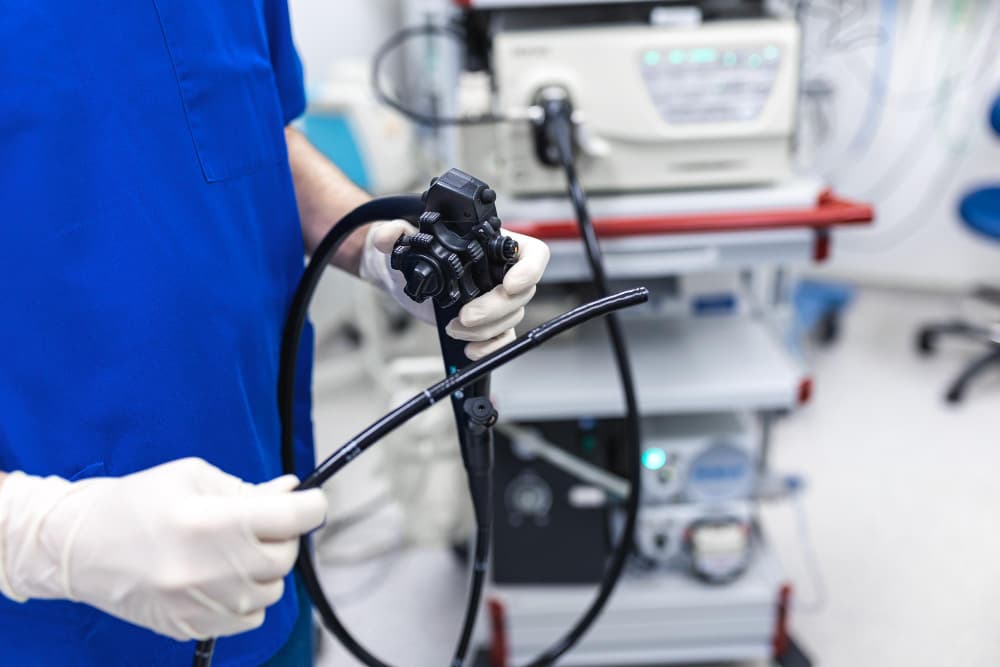
Traditional colonoscopy uses air or CO₂ gas pumped into the colon to inflate it, creating space for the camera to navigate through. While this approach is effective, the inflation itself can contribute to discomfort during the procedure.
Patients may experience bloating, cramping or pressure as the scope passes through the natural bends of the colon.
For some individuals, concerns about discomfort become a reason to delay or avoid screening altogether.
What is Water-Assisted Colonoscopy?
Water-assisted colonoscopy replaces air inflation with water during the insertion phase of the procedure. Instead of expanding the colon with air, warm water is gently infused to help guide the colonoscope through the bowel.
This allows the colon to remain in a more natural state during insertion and may reduce stretching of the bowel wall. The scope is advanced using water as the primary medium rather than relying on air insufflation.
Multiple clinical studies have evaluated this technique and its potential benefits for patient comfort.
What the Research Actually Shows
Several clinical studies have evaluated water-assisted colonoscopy and its impact on patient comfort, sedation requirements, procedure completion rates and detection outcomes.
Pain: Significantly Reduced
This is where the evidence for water-assisted colonoscopy is strongest and most consistent.
A meta-analysis pooling data from nine randomised controlled trials involving more than 1,400 patients found that water-assisted colonoscopy resulted in significantly lower pain scores compared with standard air colonoscopy.
In practical terms, many patients report less discomfort during the procedure. Some describe the sensation as pressure rather than pain, while others experience only minimal discomfort.
Less Sedation – Real, Measurable Benefit
The same meta-analysis found that patients undergoing water-assisted colonoscopy had significantly lower odds of requiring sedation compared with those undergoing standard air colonoscopy.
For some patients, reducing sedation can be beneficial. Sedation may require intravenous access, post-procedure monitoring and recovery time. Patients who receive sedation are also generally advised not to drive and may require someone to accompany them home after the procedure.
While many patients still choose sedation, water-assisted colonoscopy may provide greater flexibility for those who wish to minimise or avoid it where appropriate.
Procedure Completion: Better Rates
Water-assisted colonoscopy has also demonstrated higher cecal intubation rates in some studies. Cecal intubation refers to successfully advancing the colonoscope to the beginning of the large intestine, allowing the entire colon to be examined.
A complete examination is important because it helps ensure all relevant areas of the colon can be assessed during screening.
What about Polyp Detection?
Current evidence suggests that water immersion colonoscopy achieves adenoma detection rates comparable to standard colonoscopy. The difference in adenoma detection rates reported in studies has not reached statistical significance for the water immersion technique.
In practical terms, patients can expect a thorough and complete examination while benefiting from a technique designed to improve comfort. The technique prioritises comfortable and effective insertion of the scope, while careful inspection for polyps and abnormalities continues during withdrawal of the colonoscope.
Why Patient Comfort Matters in Colonoscopy
Colorectal cancer remains one of the most commonly diagnosed cancers in Singapore. Many cases develop from polyps that grow slowly over a period of years before becoming cancerous.
One of the advantages of colonoscopy is that it allows doctors to detect and remove polyps during the same procedure, making colonoscopy both a screening and preventive tool.
However, screening can only be effective when people are willing to undergo it. Addressing concerns about discomfort and sedation may help reduce barriers to screening and encourage more people to seek assessment when appropriate.
Who is Water-Assisted Colonoscopy Particularly Suited For?
Many patients undergoing colonoscopy may be suitable candidates for a water-assisted approach.
- Patients Who Are Anxious About Colonoscopy
Individuals who are concerned about discomfort or who have heard negative experiences from others may find reassurance in learning about techniques designed to improve comfort during the procedure. - Patients Who Wish to Minimise Sedation
Some patients prefer to reduce sedation for personal or practical reasons. Water-assisted colonoscopy may offer an alternative approach that supports this preference, where clinically appropriate. - Patients With Challenging Anatomy
Individuals with a long or tortuous colon may experience greater discomfort during standard air insufflation. Water-assisted techniques can sometimes help facilitate navigation through the bowel in these situations. - First-Time Screening Patients
For patients undergoing their first colonoscopy, a more comfortable experience may help reduce anxiety about future surveillance procedures if follow-up examinations are required.
A Note on Complications
No endoscopic procedure is entirely without risk. Although complications from colonoscopy are uncommon, they can occur. Potential risks include bleeding, perforation, reactions to sedation and other procedure-related complications.
The risk of serious complications from a routine diagnostic colonoscopy is generally low, but patients should discuss their individual circumstances with their doctor before proceeding.
Water-assisted colonoscopy may reduce the need for sedation in selected patients, but it does not eliminate the inherent risks associated with colonoscopy itself.
Is Water-Assisted Colonoscopy Right for You?
Water-assisted colonoscopy may be a suitable option for some patients, particularly those who are concerned about comfort during the procedure or who wish to minimise sedation where appropriate.
However, no single technique is necessarily the best choice for every individual. Factors such as medical history, procedural requirements, anatomy and patient preferences should all be considered when deciding on the most appropriate approach.
A consultation with our 肠胃科医生 can help determine which colonoscopy technique is most suitable for your circumstances and screening needs.

Frequently-Asked Questions
Yes. Regardless of the technique used, thorough bowel cleansing beforehand is essential. Clear preparation instructions will be provided before the procedure.
The colonoscopy itself typically takes between 20 and 40 minutes. Patients should allow additional time for preparation, registration, recovery and discharge.
In many cases, yes. Polyps identified during colonoscopy can often be removed during the same procedure without requiring a separate appointment.
Yes. Water-assisted colonoscopy and sedation are not mutually exclusive. Many patients continue to opt for sedation and this remains an available option where appropriate. The water-assisted technique simply provides an approach that may help reduce sedation requirements for some individuals.
Not necessarily. Every patient experiences colonoscopy differently and some degree of discomfort may still occur. However, studies suggest that water-assisted colonoscopy can reduce discomfort during insertion when compared with standard air insufflation techniques.
Water-assisted colonoscopy can be used in many patients undergoing colonoscopy, but suitability depends on individual circumstances, medical history and procedural requirements. During a consultation, your gastroenterologist can advise whether this approach is appropriate for you.
Screening recommendations vary depending on age, family history, symptoms and individual risk factors. If you have concerns about your risk, it is advisable to discuss screening with a gastroenterologist.
Colonoscopy procedures are generally claimable under MediShield Life and Integrated Shield Plans in Singapore, subject to the terms of your specific policy. It is recommended that you check with your insurer or the clinic team for detailed guidance on coverage for your procedure.
Book a Consultation

If you would like to learn more about colonoscopy screening or discuss whether water-assisted colonoscopy may be appropriate for you, schedule a consultation with Dr John Hsiang.
Every patient receives an individualised assessment to ensure the most appropriate approach is selected based on their medical history, concerns and clinical needs.
参考资料
1. Lin S et al. Water intubation method can reduce patients’ pain and sedation rate in colonoscopy: a meta-analysis. Dig Endosc. 2013;25:231–240.
2. Hsieh YH et al. Prospective multicenter randomized controlled trial comparing adenoma detection rate in colonoscopy using water exchange, water immersion, and air insufflation. Gastrointest Endosc. 2017;86:192–201.
3. Fuccio L et al. Water exchange colonoscopy increases adenoma detection rate: systematic review with network meta-analysis. Gastrointest Endosc. 2018;88:589–597.
4. Leung FW. Water-Assisted Colonoscopy. Gastrointest Endosc Clin N Am. 2015;25:211–226.
5. Singapore Cancer Registry Annual Report 2022. National Registry of Diseases Office.
6. NCIS Singapore. Colorectal Cancer. www.ncis.com.sg.
“Water-assisted colonoscopy may make the procedure more comfortable and improve polyp detection. Instead of using air to expand the colon, water is infused during scope insertion, helping to reduce bowel stretching, looping and discomfort.”Insights Into Water Exchange Colonoscopy
本网站上的内容,包括文本、图形、图像和信息,仅供一般信息参考之用,不得用作专业医疗建议、诊断或治疗的替代品。Richmond Endoscopy and gastrointestinal Specialists Pte.LTD.不对未经咨询其专家而使用本网站信息的行为承担任何责任。.