
Faecal Microbiota Transplantation (FMT) in Singapore
Your gut is home to trillions of microbes, and when this ecosystem breaks down, the effects can reach well beyond digestion. FMT (faecal microbiota transplant), also called a stool transplant, is the clinically guided transfer of a healthy donor’s gut microbiome into a patient whose own microbial balance has been disrupted. It is one of the most significant developments in modern gastroenterology.
瑞盟腸胃科中心
John Hsiang 肠胃科专科医生
MBChB(新西兰),FRACP(澳大拉西亚),MD(医学博士),FRCP(爱丁堡),FAMS(肠胃病学)
John Hsiang 肠胃科专科医生 他是新加坡一位杰出的消化内科医生,在消化健康方面接受过广泛的培训并拥有丰富的经验。他获得了 澳大拉西亚皇家内科医学院院士 他于 2012 年获得胃肠病医学博士学位,并拥有多数乙型肝炎和脂肪肝研究成果。
他为各种消化系统和肝脏问题提供治疗,将全面评估与量身定制的管理相结合,为患者的长期健康提供支持。.
向医生擅长 胃镜 (上内窥镜检查)和 大肠镜检查 调查症状,早期发现胃癌和大肠癌,并提供及时的治疗方案。.
他致力于提供个性化护理,并采用循证方法,在诊断和治疗的每个阶段都以准确性、有效性和患者舒适度为优先。
会说的语言
流利的英语、普通话和福建话
受过专科进修医生
20 多年的临床经验
What Is a Faecal Microbiota Transplant (Stool Transplant)?
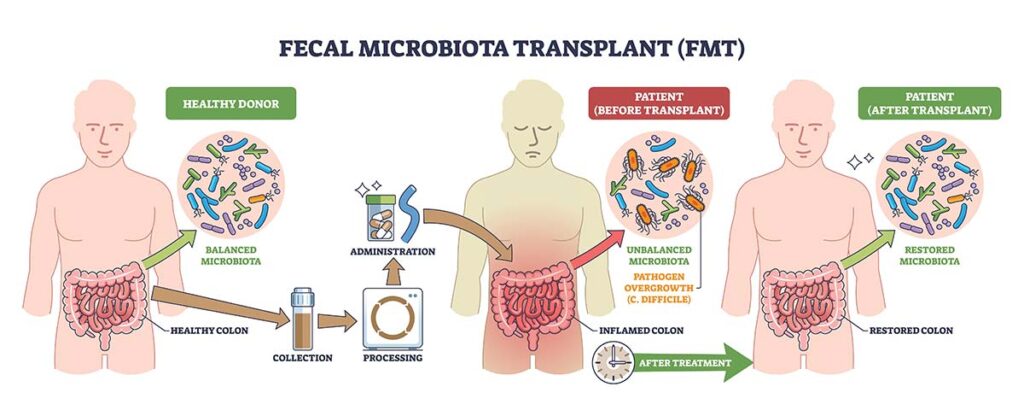
A faecal microbiota transplant, commonly called a stool transplant, fecal transplant or gut microbiome transplant, is the process of transferring processed stool from a carefully screened healthy donor into the gastrointestinal tract of a recipient. The aim is to replace a disrupted, disease-associated gut microbial community with a diverse, healthy one.
In Singapore, FMT is administered as a medical procedure under a gastroenterologist’s supervision, using donor preparations sourced from a clinically certified stool bank with Asian-population donors. It is not a consumer product, and it is not something to attempt at home.
The idea itself is old. The earliest documented use of stool-based therapy dates back to 4th-century China, where fermented faecal preparations known as “yellow soup” were used to treat severe diarrhoea. Its modern clinical form, however, is rigorous, standardised and backed by a growing body of evidence.
The gut microbiome is not passive. It helps regulate the immune system, produces compounds that keep the gut lining healthy, and forms a natural barrier against harmful bacteria. When this balance is lost, a state called dysbiosis, it has been linked to a growing list of conditions. These range from recurrent gut infections to inflammatory bowel disease, metabolic syndrome, and emerging research into autoimmune and neurological disease.
Why Gut Dysbiosis Matters
Dysbiosis, the loss of microbial diversity and balance, is linked to conditions well beyond the gut. Some links are well established, such as C. difficile and ulcerative colitis. Others, including metabolic syndrome, autoimmune thyroid disease, Parkinson’s disease and treatment-resistant depression, are still emerging but scientifically compelling.
How FMT Works
FMT introduces a diverse, healthy microbial community that outcompetes harmful strains, restores natural resistance to infection, and rebalances immune signalling. Donor selection matters a great deal: not all microbiomes produce the same results, especially for conditions beyond C. difficile.
Who Is Stool Transplant (FMT) For?
Stool transplant, or FMT, is primarily for patients with severe, recurrent C. difficile infections that don’t improve with standard antibiotics. It is also used in select cases for inflammatory bowel diseases like ulcerative colitis, and is being studied for a wider range of gut conditions. The table below shows which conditions have strong evidence behind FMT, and which are still investigational.
GI Conditions Stool Transplant (FMT) Can Treat
| Condition | Evidence Level | Clinical Status | Typical Response Rate |
|---|---|---|---|
| Typical Response Rate | High Quality | Established, guideline-recommended | 80–95% cure rate |
| Ulcerative Colitis (UC) | Moderate Quality | Supported by multiple published RCTs | ~30% achieve remission |
| Crohn's Disease | Low Quality | Investigational only | Variable; no definitive RCTs |
| 肠易激综合征(IBS) | Conflicting | Not routinely recommended | No benefit vs placebo in meta-analyses |
| Functional / Slow-Transit Constipation | Emerging | Early clinical trials | 37% vs 13% placebo (short-term) |
| Hepatic Encephalopathy | Emerging | Promising pilot data | Reduced hospitalisation in small studies |
| Pouchitis (post-colectomy) | Moderate | Used in antibiotic-refractory cases | Variable; best in resistant pouchitis |
| Checkpoint Inhibitor Colitis | Early Signal | Active investigation | Positive preliminary data |
| MDRO Gut Decolonisation | Emerging | Pilot studies positive | Effective competitive exclusion reported |
Recurrent C. difficile Infection: The Gold Standard Indication for Stool Transplant
Clostridioides difficile infection (CDI) is the clearest, most proven indication for FMT. Recurrent CDI, defined as two or more episodes despite antibiotics, is hard to break with antibiotics alone. Each course further weakens the gut microbiome that would otherwise keep C. difficile in check, creating a cycle of infection and treatment.
FMT breaks this cycle by restoring the gut’s natural resistance to infection. Cure rates are consistently 80–95%, well above what vancomycin and fidaxomicin achieve for recurrent disease.1,2 The 2024 AGA guideline recommends FMT after a first or second recurrence, with colonoscopic delivery preferred for severe cases.3
Singapore Context:
CDI is less common here than in Western hospitals, but it does happen, especially after antibiotic use during a hospital stay, and in elderly or immunosuppressed patients. If you’ve had more than one episode of C. difficile diarrhoea despite antibiotic treatment, talk to your gastroenterologist about a stool transplant.
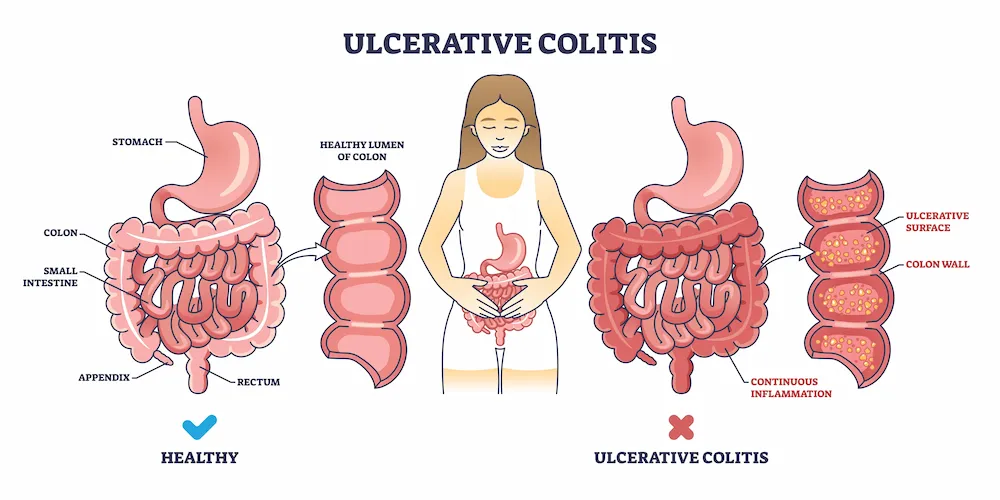
Ulcerative Colitis: Meaningful Benefit, Realistic Expectations
UC is the strongest non-CDI indication for FMT, backed by multiple randomised trials. About one in three patients with moderate to severe UC achieve remission after treatment. Results tend to last longer when FMT follows an initial remission.
Donor selection matters more here than it does for CDI. In UC, the specific make-up of the donor’s microbiome affects whether treatment works.
FMT is a genuinely useful option for UC patients who haven’t responded to standard therapies, or who want a complementary approach alongside biologics or immunosuppressants, with a favourable safety profile.
Emerging
Hepatic Encephalopathy
"(《世界人权宣言》) gut-liver axis plays a key role in HE. Dysbiosis drives ammonia build-up and inflammation. Pilot studies show FMT may lower ammonia-producing bacteria, reduce hospitalisations, and improve cognitive function in cirrhotic patients with recurrent HE.
Investigational
Checkpoint Inhibitor Colitis
Immune checkpoint inhibitors (anti-PD-1, anti-CTLA-4) can trigger severe colitis in cancer patients. Early data suggest FMT may resolve steroid-refractory cases, an important option as immunotherapy use grows.
MDRO Intestinal Decolonisation
FMT shows promise in clearing gut colonisation by drug-resistant organisms (ESBL, CRE, VRE), a mechanism antibiotics can’t replicate. Especially relevant for recurrent, resistant urinary tract infections linked to gut reservoirs.
Investigational
Graft-Versus-Host Disease (GI GVHD)
In stem cell transplant patients, gut GVHD is life-threatening, and the gut microbiome is often severely disrupted. Early FMT data suggest it may reduce disease severity by restoring immune balance in the gut. Still under active investigation.
Beyond the Gut: Other Conditions FMT May Help With
Your gut is connected to nearly every organ in your body. So as gut microbiome research has grown, so has interest in using FMT for conditions that seem unrelated to digestion at first. Here’s an honest look at where the science stands. Most of these uses are still investigational and not yet standard treatment, but the science behind them is promising, and several are already in clinical trials.
| Condition | Biological Pathway | Evidence | Current Status |
|---|---|---|---|
| Obesity / Metabolic Syndrome | Gut-metabolic axis; energy harvest | Limited | Results modest and variable; ongoing trials |
| Type 2 Diabetes | Insulin resistance; gut permeability | Preclinical + Early Clinical | FMT may improve glycaemic control; trials ongoing |
| Non-Alcoholic Fatty Liver Disease (NAFLD/MAFLD) | Gut-liver axis; lipopolysaccharide translocation | Early | Preliminary interest; clinical data insufficient |
| Depression / Anxiety | Gut-brain axis; serotonin, vagal signalling | Very Limited | Research setting only |
| Parkinson’s Disease | Gut-brain axis; alpha-synuclein pathology | Very Limited | Open-label pilot trials; no definitive evidence |
| Autism Spectrum Disorder (ASD) | Gut-brain axis; microbiome-behaviour link | Limited | Small trials; some symptomatic benefit reported |
| Cancer Immunotherapy Enhancement | Tumour immunity; T-cell function modulation | Emerging, Active Trials | FMT combined with PD-1 inhibitors under study |
| Recurrent UTI (Resistant Strains) | Gut as urinary pathogen reservoir | Emerging | Positive pilot data for gut reservoir decolonisation |
| Allergic Rhinitis / Atopic Conditions | Gut-immune axis; Th2 regulation | Early Preclinical | Animal data positive; human trials very limited |
FMT and Autoimmune Conditions
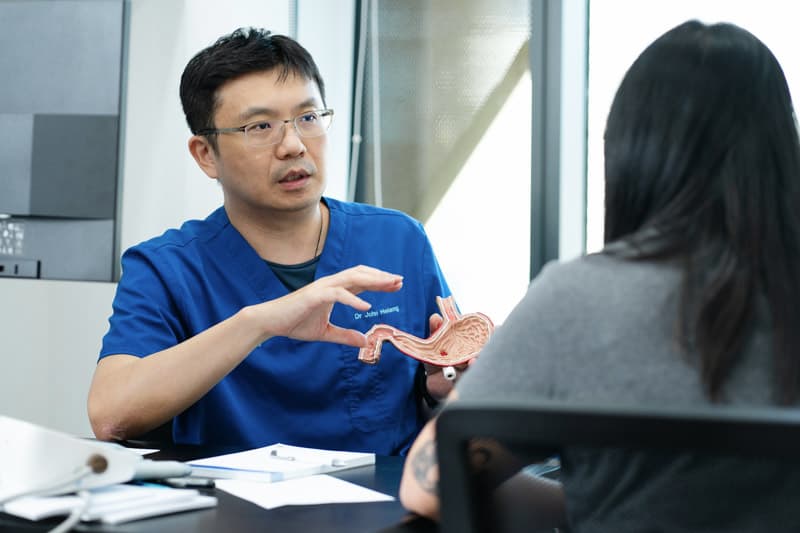
One of the most promising, and complex, areas of FMT research is autoimmune disease. The reasoning is grounded in solid biology: about 70% of the body’s immune cells live in or near the gut, where the microbial community helps shape immune tolerance. When that balance breaks down, the immune system can start attacking the body’s own tissue.
A 2022 review of 14 trials across six autoimmune conditions found FMT improved symptoms, immune markers and gut microbiota composition. A 2024 review in Autoimmunity Reviews, covering more than 12 conditions, was the first of its kind. A 2025 meta-analysis confirmed benefits across lupus, rheumatoid arthritis, multiple sclerosis and type 1 diabetes.
Clinical Note from Dr John Hsiang: Most autoimmune uses of FMT are investigational and shouldn’t replace standard, disease-modifying therapy. Still, given its favourable safety profile, it’s worth discussing as a complementary strategy, especially for treatment-refractory cases. Each patient is assessed individually.
Inflammatory Bowel Disease (UC / Crohn’s)
IBD sits between GI and autoimmune disease. UC has the strongest FMT evidence, while Crohn’s remains investigational.
Moderate evidence (UC) · Investigational (Crohn’s)
Systemic Lupus Erythematosus (SLE)
Gut dysbiosis is well documented in SLE. Mouse studies show real benefit, and human trials are early but well designed.
Early Investigational
Rheumatoid Arthritis (RA)
Microbial imbalances, including Prevotella copri overgrowth, are linked to RA. Early trials show improved joint scores and lower inflammation.
Investigational, Active Trials
Multiple Sclerosis (MS)
MS patients show reduced gut diversity. Its role in myelin-related immunity is under active study, with early trial results expected soon.
Early Investigational
Type 1 Diabetes Mellitus (T1DM)
FMT may slow beta-cell loss in new-onset T1DM by shifting the gut-immune balance, particularly in younger patients near diagnosis.
Investigational
Autoimmune Liver Disease (AIH, PBC, PSC)
"(《世界人权宣言》) gut-liver axis is directly involved, with bile acid changes and gut permeability common in these conditions. Asian research is especially relevant for Singapore patients.
Early Investigational
Autoimmune Thyroid Disease (Hashimoto’s / Graves’)
Reduced gut diversity is common in both conditions. Early studies, mostly from China, show FMT may improve thyroid antibody levels and symptoms.
Early Evidence, Asia-Led Research
Psoriasis & Atopic Dermatitis
Skin and gut microbiomes are closely linked. Small trials and case reports show FMT may help clear symptoms in some psoriasis patients.
Case Reports / Small Trials
The FMT Procedure in Singapore: Step by Step
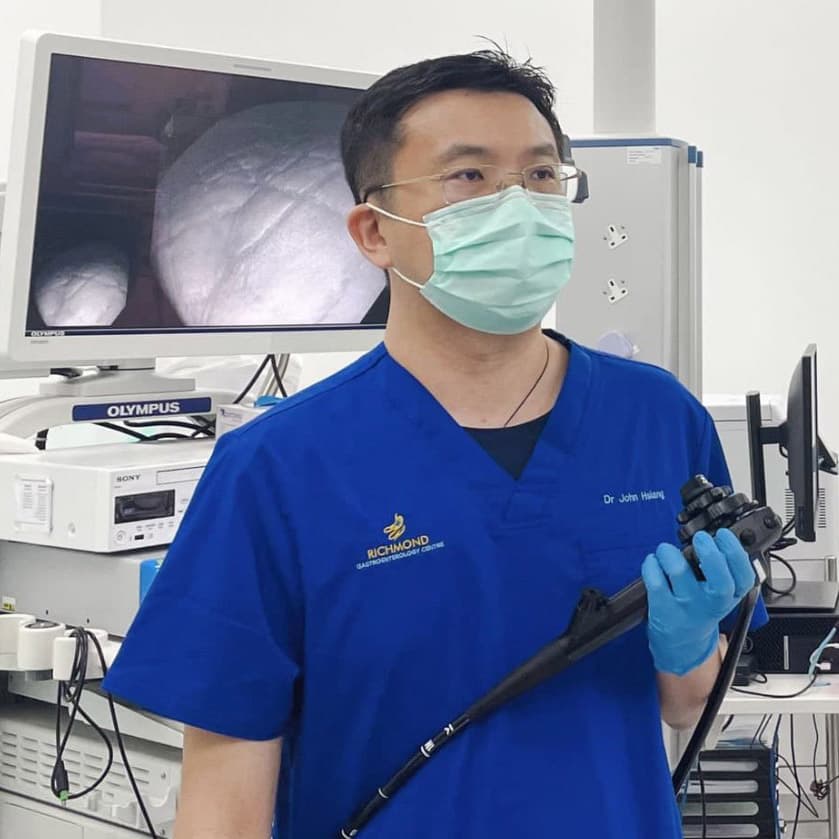
FMT isn’t one fixed procedure. It’s a clinical framework with several delivery options, chosen based on your condition and needs. Here’s how it works at Richmond Gastroenterology Centre.
Donor Screening: The Most Important Step in Any Stool Transplant
Patient Consultation and Suitability Assessment
Pre-Procedure Bowel Preparation
Stool Processing and Preparation
Stool Transplant Delivery: Four Formats Available
Post-FMT Follow-Up and Monitoring
How Is the Stool Transplant Delivered? Four Formats Explained
One of the most common questions patients ask is: “Do I have to have a colonoscopy for a stool transplant?” The answer is no, not always. Here are the four delivery formats currently available in Singapore, and when each is used.
Colonoscopic FMT
Given directly into the colon during a sedated 大肠镜检查, allowing precise delivery and a simultaneous check of the colon.
Best for: C. difficile · UC · Crohn’s · Severe / first FMT dose
Enema (Rectal Infusion)
A simpler, non-invasive option given rectally, without colonoscopy. Good for repeat or follow-up doses.
Best for: Maintenance doses · Follow-up FMT · UC
Oral FMT Capsules
Frozen capsules taken by mouth, no procedure needed. Designed to release in the lower gut.
Best for: Maintenance · Patient preference · Less severe indications
Microencapsulated Oral Format
A next-generation capsule with extra protection for better survival through the stomach and controlled release.
Best for: Improved compliance · Repeat dosing · Emerging indications
Not recommended:
Nasogastric or nasoduodenal tube delivery carries a real aspiration risk and is generally avoided. “DIY” FMT at home is dangerous. Unscreened donors have led to documented deaths. FMT should always be done under clinical supervision.
Where Does the Donor Stool Come From? Singapore’s Certified Gut Microbiome Stool Bank
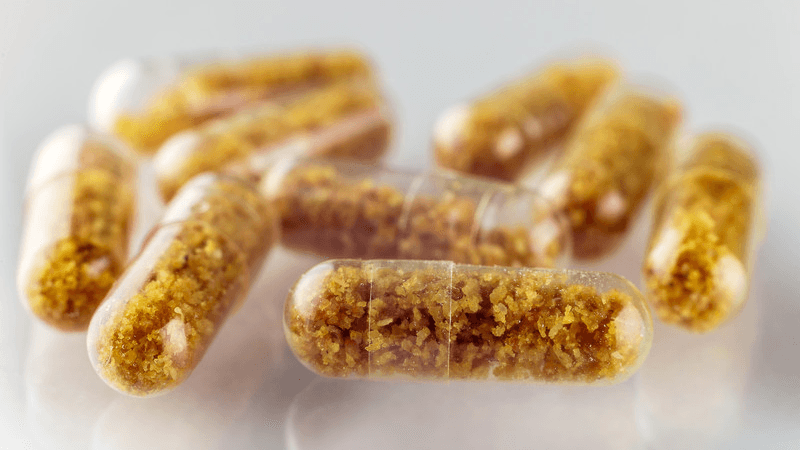
Richmond Gastroenterology Centre sources donor stool from Singapore’s only clinically certified gut microbiome stool bank, Southeast Asia’s first and only such facility, operating since 2020.
What sets it apart is its Asian-centric donor pool: with a database of over 20,000 samples, shaped by distinct diets, environments and genetics, it produces preparations that engraft more effectively in Singaporean and Southeast Asian patients than Western donor databases typically allow.
Donor screening is continuous, not just at onboarding. It includes detailed medical and lifestyle history, regular physical exams, and ongoing blood and stool testing for pathogens and drug-resistant organisms.
Is a Stool Transplant (FMT) Safe? What Are the Risks?
FMT has a well-characterised safety profile in appropriately selected patients, particularly for CDI. The most common side effects, transient bloating, cramping, altered stool consistency and low-grade fever in the first 48 hours, are generally self-limiting and resolve without intervention.
Infection transmission is the primary safety concern, managed through rigorous multi-pathogen donor screening. Singapore’s certified stool bank screens for standard pathogens, MDROs, CMV, EBV and other organisms of concern.
Immunocompromised patients, including those on biologics, high-dose steroids or chemotherapy, need an individualised risk-benefit assessment and closer monitoring. FMT can still be appropriate for this group.
Aspiration risk is specific to nasogastric or nasoduodenal tube delivery, a route avoided at Richmond Gastroenterology Centre in favour of colonoscopic, capsule or enema delivery.
Long-term safety data continues to accumulate. Follow-up data of up to 7 years shows no increased incidence of autoimmune, metabolic or malignant conditions attributable to FMT,10 with no serious long-term sequelae reported from properly screened preparations.

Frequently Asked Questions
How much does a stool transplant cost in Singapore?
Is a faecal transplant covered by Medisave or insurance in Singapore?
How many sessions of FMT will I need?
Is a stool transplant painful or uncomfortable?
Can FMT treat my autoimmune condition?
Should I bank my own gut microbiome?
Is "DIY" home stool transplant safe?
Can I choose between capsules and colonoscopy for my stool transplant?
Considering FMT or Stool Transplant?
References & Evidence Sources
- Minkoff NZ et al. Fecal Microbiota Transplantation for Recurrent Clostridioides Difficile. Cochrane Database Syst Rev. 2023;4:CD013871.
- Zhang X et al. Gut Microbiome Dysbiosis and Regulation by FMT: Umbrella Review. Front Microbiol. 2023;14:1286429.
- Peery AF et al. AGA Clinical Practice Guideline on Fecal Microbiota-Based Therapies. Gastroenterology. 2024;166(3):409–434.
- Imdad A et al. Fecal Transplantation for Treatment of IBD. Cochrane Database Syst Rev. 2023;4:CD012774.
- DuPont HL et al. Abnormal Intestinal Microbiome in Medical Disorders and Reversibility by FMT. Dig Dis Sci. 2020;65(3):741–756.
- Zeng L et al. Safety and efficacy of FMT for autoimmune diseases: systematic review and meta-analysis. Front Immunol. 2022;13:944387.
- FMT in autoimmune diseases: An extensive paper on a pathogenetic therapy. Autoimmun Rev. 2024.
- Vineesh A et al. Gut Health and Autoimmune Diseases: Systematic Review and Meta-Analysis. Cureus. 2025.
- Lu G et al. Washed preparation of faecal microbiota changes transplantation safety, quantitative method and delivery. Microb Biotechnol. 2022;15(9):2439–2449.
- Comprehensive literature review: Safety and efficacy of FMT as modern adjuvant therapy. Front Immunol. 2024.
咨询我们的专家
出现消化道症状或不适?请向我们的消化科医生咨询,以便更清楚地了解您的病情和治疗方案。.
您可以使用我们的联系表格进行预约,或拨打诊所电话 6517 9958